
A heat pump hot water system uses refrigerant to pull warmth from the surrounding air and transfer it into a storage tank, using up to 75% less energy than a standard electric unit as per NSW Climate and Energy Action. In Perth WA’s mild climate, that translates to lower bills and faster payback.
Key Takeaways
- Heat pumps run on the same refrigeration cycle as your fridge, just in reverse, drawing heat from the air to warm your water tank.
- Perth WA’s climate as per Bureau of Meteorology annual averages above 18°C) is close to ideal for heat pump efficiency year-round.
- Federal STC rebates and the WA Household Energy Scheme can take thousands off the upfront figure as per Clean Energy Regulator STC scheme.
- Sizing is the single biggest decision: get the litre capacity wrong and you pay for it every shower, every day.
- Quiet operation, long warranties, and falling install times have moved heat pumps from “early adopter” to mainstream in Perth WA bathrooms and laundries.
When Perth WA households swap an ageing electric storage tank for a heat pump. The change shows up on the very next power bill. We have walked hundreds of homeowners through this decision at our showroom. And the same pattern keeps repeating: confusion about how it works, surprise at how much energy it saves, and relief that the install is simpler than expected. This piece breaks down the technology, the climate fit, the sizing rules, and the rebates. So you can buy once, buy right, and stop wasting time scrolling unfamiliar product pages.
How a heat pump hot water system works
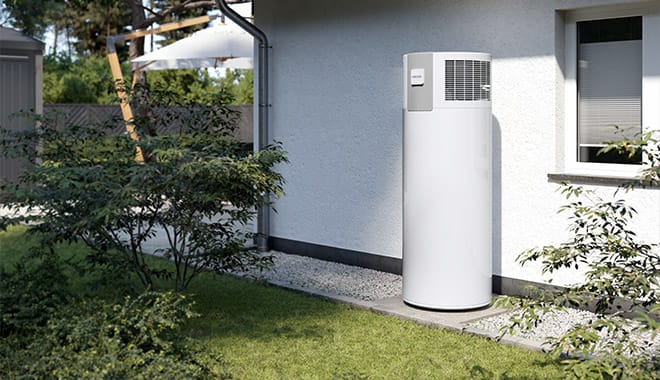
A heat pump water heater captures warmth from the ambient air and compresses it through a refrigerant. Then transfers that heat into a storage tank. It is a fridge running in reverse. The compressor does the work; the air does the lifting.
Picture a sponge soaking up warmth from a sunny laundry wall. The refrigerant inside the evaporator absorbs heat from the air around the unit. Then a compressor pressurises that refrigerant until it becomes very hot. The heated refrigerant travels through a heat exchanger that warms the water in your tank. Because the system moves heat rather than generating it, the energy ratio is roughly one unit of electricity in for three to four units of heat out. That is the efficiency gap that older electric and gas systems simply cannot close.
For a deeper walkthrough of the older technologies most Perth WA homes are replacing. See our hot water system buying guide for Perth WA households, which covers the trade-offs between electric, gas, solar, and heat pump.
Why Perth WA’s climate suits heat pumps
Perth WA’s average daily temperature sits above 18°C across the year as per Bureau of Meteorology Perth WA climate data, which is the sweet spot for heat pump efficiency. The warmer the air, the easier the refrigerant cycle pulls heat, and the less the compressor has to work.
In our work with Perth WA plumbing renovations, we see heat pumps installed in carports, side passages. And laundries with good airflow consistently deliver hot water through winter without dropping into resistive boost mode for more than an hour or two a day. Cooler climates like Tasmania or the Snowy region can force the unit into electric backup heating overnight. Which erodes the efficiency advantage. Perth WA rarely puts a heat pump under that kind of stress.
If you are weighing this against solar hot water or gas. Our ultimate guide to hot water systems in Perth WA lays out the head-to-head with local install considerations.
Sizing the right unit for your household
Get the litre capacity wrong and the unit either runs out of hot water mid-shower or wastes energy keeping a half-empty tank warm. Australian sizing rules of thumb as per put a 1–2 person household at 125 – 170L. A 3–4 person household at 270 – 315L, and 5+ at 315L or larger.
Three variables shift those numbers:
- Shower habits. Two teenagers and a rainfall showerhead push you up a tier.
- Dishwasher and laundry timing. Running both at peak draw alongside morning showers tightens demand.
- Off-peak tariff access. If you can heat the tank overnight on a controlled-load tariff, a slightly larger unit gives you a buffer for almost no extra running cost.
Our showroom team sizes units based on actual household routines, not just headcount. That conversation usually saves customers from over-buying by a tier or, worse, under-buying. And writing off a system within five years. For households mid-renovation, our 2026 hot water systems buyer’s guide maps unit size to bathroom. And laundry layout as per Energy Safe Victoria 2024.
Rebates, installation, and what to plan for
The federal Small-scale Technology Certificate (STC) scheme discounts heat pump water heaters at the point of sale. With the rebate value applied upfront by the installer as per Clean Energy Regulator STC scheme On top of that, Western Australian households can stack the WA Household Energy Scheme for eligible models and installs.
Installation itself is usually a one-day job for a licensed plumber. The unit needs:
- A weatherproof outdoor location with at least 300mm of clearance on the air-intake side
- A dedicated 10-amp or 15-amp circuit (a licensed electrician handles this)
- Cold water inlet, hot water outlet, tempering valve, and a condensate drain
- Compliance with WA plumbing standards, which is non-negotiable Plumbers Licensing Board of Western Australia for licence verification
We always recommend confirming your installer’s licence number before they arrive. It takes thirty seconds and protects your warranty.
Comparing heat pump models for Australian homes
Not every heat pump is built the same. Split-system designs separate the compressor from the tank, integrated units keep everything in one shell. And CO2 refrigerant models trade slightly higher upfront figures for the strongest cold-weather performance.
← Scroll to see all columns →
| Feature | Integrated Unit | Split System | CO₂ Refrigerant |
|---|---|---|---|
| Footprint | Single tall cylinder | Outdoor compressor + indoor tank | Outdoor compressor + indoor tank |
| Best For | Side passages, laundries | Homes with separate plant rooms | Cold microclimates, hill suburbs |
| Noise | Compressor near tank | Compressor away from living areas | Quietest at the tank |
| Maintenance Access | All-in-one service call | Two access points | Two access points |
For Perth WA’s coastal and metro suburbs, integrated units tend to be the practical pick: smaller footprint, simpler install. No refrigerant lines running through walls. For colder pockets in the hills, the CO2 designs earn their premium. Our hot water system hacks article covers a few install-day decisions that quietly extend any unit’s lifespan.
Hot Water System Frequently asked questions
How does a heat pump hot water system actually work?
The refrigerant cycle inside the unit absorbs ambient air heat through an evaporator coil. A compressor pressurises that refrigerant until it is hot enough to warm the water tank via a heat exchanger. The cycle repeats whenever the tank thermostat calls for heat. Because the electricity only runs the compressor and fan, not a resistive element. The system delivers roughly three to four units of heat per unit of energy drawn NSW Climate and Energy Action.
Will a heat pump hot water system work well in Perth WA’s climate?
Yes, and arguably better here than in most of Australia. Perth WA’s annual average temperature sits above 18°C with mild winter, So the heat pump rarely needs its resistive backup element. We have seen Perth WA households on flat tariffs run a 270L unit year-round at a fraction of their old electric storage bill. The warmer the air the unit draws from, the better the efficiency.
How long does a heat pump hot water system last in Australia?
A well-sized, well-installed heat pump runs reliably for 10 to 15 years. With most reputable brands offering 5 to 7 year tank warranties and 1 to 5 year compressor warranties. The key drivers of lifespan are water quality, install quality, and annual servicing. In our work with Perth WA households, we have found that units installed with a sacrificial anode swap every five years routinely outlast their warranty by a wide margin.
Are heat pump hot water systems noisy?
Split systems put the compressor outside, so indoor noise is effectively nil. Integrated units sit closer to living areas, but with reasonable placement (away from bedroom windows on a stable pad). The sound is a soft background hum, not a disturbance.
What size heat pump hot water system do I need for my household?
For 1 to 2 people, look at 125 to 170 litres. For 3 to 4 people, 270 to 315 litres is the standard range. For 5 or more, step up to 315 litres or larger. Especially if showers cluster in the morning rush as per energy.gov.au sizing guidance. Talk to your supplier about peak draw patterns, not just headcount, because two teenagers can outdraw a family of four.
The next step is the easy one
Heat pumps are no longer the experimental option. They are the default for Perth WA households serious about cutting power bills without sacrificing shower pressure or shower time. We have spent years guiding renovators through this decision, helping them match the right unit to the right household. The right rebate, and the right install spot. If you are mid-renovation or replacing an ageing system, the kitchen. And bathroom fit-out can be planned around the new unit from day one, and our team is here to walk you through the options without the run around. Next, take a look at our [premium kitchen mixer range for Perth WA’s hard water to round out your renovation plan.